


Ad
Software developers in the automotive industry spend 35% of their time on software no customer sees
That time could be spent developing what sets one car apart from another.
This is what QNX found in its new "2026 Under the Hood: SDV Developer Report". QNX software runs in more than 275 million vehicles.
In the report you'll see:
where Germany stands against the rest of Europe, China, Japan, South Korea and North America
why Germans are the only ones who fear a different risk than a cyberattack
what would give developers the most time back
how developers see their own future with AI
Welcome to Issue #135 of The German Autopreneur.
May 2007. China's new research minister is giving an interview on German TV. And he's speaking German.
The reporter asks: Does Germany now have a new friend in the Chinese government?
His answer: Not a new friend. An old one.
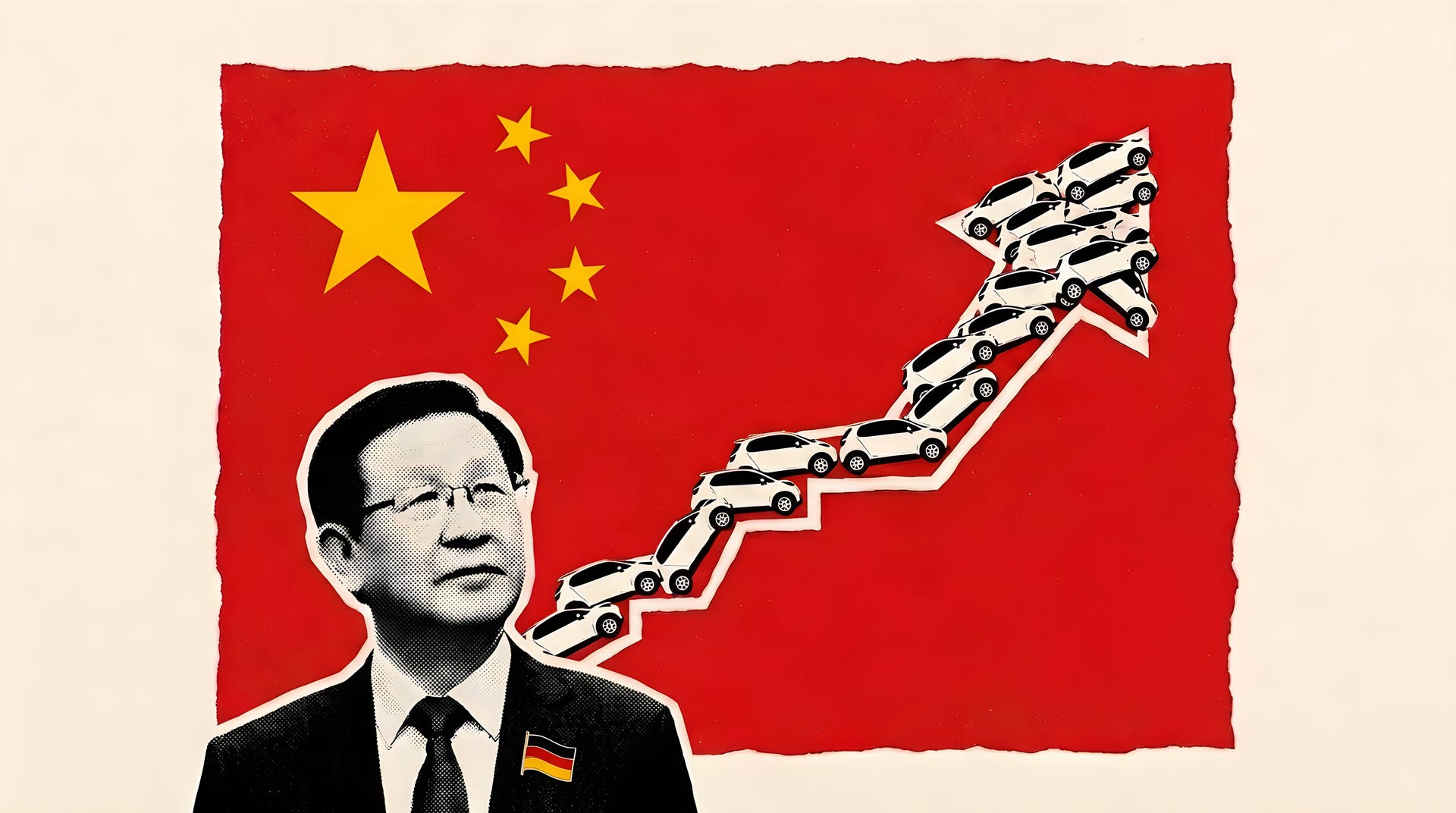
In just a few years, China's car industry has pulled off an incredible sprint. Now the country is on the verge of becoming an automotive superpower.
We've looked at the reasons many times here. But there's still a missing piece: Wan Gang.
He spent 11 years as an engineer at Audi in the German city of Ingolstadt. Then he returned to China and became research minister. And there, he laid the foundations for China's rise.
Today we'll look at:
Who Wan Gang is and how he got China to switch to EVs
Which German car CEO did his PhD under Wan in Shanghai
And why China is only just getting started
The Chinese Engineer at Audi
The story starts in Shanghai in 1984. Wan Gang is 32. He teaches mechanics at Tongji University.
In October, VW signs the deal for its 1st joint venture in China. 3 days later, VW's then-CEO Carl Hahn visits Wan's university. He wants to help set up an automotive engineering department.
Carl Hahn predicts:
First, many German engineers will come to China
In 20 to 40 years, most engineers in China will be Chinese
So, roughly now.
Wan is excited about the new department. He's interested in cars. And China is just opening up to the West.
He wants to make the most of this chance. In 1985, he moves to Germany to do his PhD.
Right at the start, his professor sends him hitchhiking around Germany for a month. Everywhere he goes, the first question is: Are you Japanese or Chinese? Then people ask where China is heading and whether he wants to go back.
But for now, he stays. After his PhD, 6 companies want to hire him, from VW to Mercedes. He picks Audi.
Back then, Audi is the smallest of Germany's major carmakers. Wan's thinking: That's where he can move up fastest.
He starts in development. After 5 years, he moves into production and soon heads a department with more than 2,000 people. When someone on his team has a birthday, he brings 2 bottles of beer onto the shop floor.
In the paint shop, he works with a young German colleague on a new production line. They'll meet again later in Shanghai.
But what Wan really dreams of is something else: a car that runs on electricity or hydrogen. Alongside his Audi job, he supervises PhD students who research fuel cells.
Later, he says this about German carmakers: New powertrains have a hard time there. Sometimes they're even held back.
But China urgently needs a different way to power cars. Wan travels there often for Audi and sees the smog grow along with the number of cars. China also has to import more and more oil.
Wan thinks it through: If car ownership in China ever reaches German levels, there won't be enough oil. And the air will be unbearable. So China needs cars that don't run on gasoline.
Back in Ingolstadt, he often gives Chinese visitors tours of the plant. On one of these tours, his guest is China's research minister Zhu Lilan. He has a proposal for her.
At Audi, he has seen how far ahead the West is on combustion engines. He's convinced: China will never catch up. So China should skip combustion engines and move straight to a new powertrain.
In 2000, he sends China's government a written proposal. China's premier wants to back him. The research ministry and his old university want him to return to China.
At the end of 2000, Wan quits. By then, he has spent 15 years in Germany, 11 of them at Audi.
Back to China With a Plan
At his old university, his job is to set up an EV research center.
His German colleague from the paint shop also comes to Shanghai. He wants to do his PhD with Wan.
Back then, China looks very different from the China we know today:
Hundreds of cyclists wait at every red light
Very few people own a car
The taxis are VW Santanas
In 2000, China builds around 2 million vehicles. Germany builds 5.5 million.
In Wan's institute, there are VW Santanas and Passats. But they're not ordinary cars anymore: Wan has taken out the gasoline engines and put in batteries and electric motors.
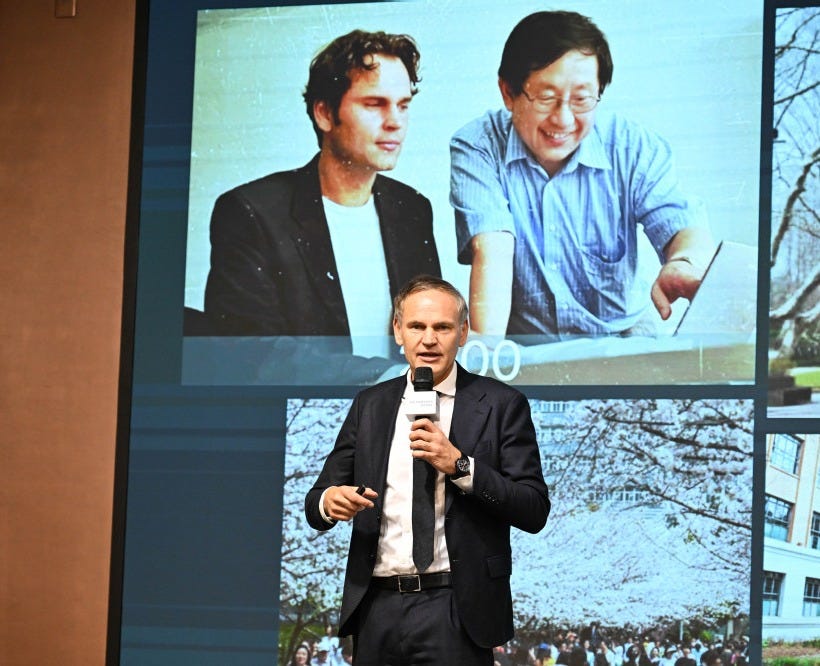
His student asks what he's doing. Wan replies: The future of the car is electric.
That German colleague is Oliver Blume. Just over 20 years later, he'll become Volkswagen's CEO.
But a few converted cars aren't enough for Wan. He wants all of China to switch to EVs. For that, he needs the state.
He writes a study on fuel-cell cars. It ends up with Zhu Lilan's successor at the research ministry.
In 2001, the new minister calls Wan in. After a long talk, the minister decides: China will get a government EV program. And Wan will plan it. He also promises Wan: I'll support you, whatever it costs.
The program starts in September 2001. Wan becomes its chief scientist. At the launch, he lays out how far China is behind other countries:
Around 20 years on combustion engines
Just 4 to 5 years on EVs
The program supports 3 powertrains: fuel cells, hybrids and battery-only EVs. It's still unclear which will win. Wan's own research focuses mainly on fuel cells.
In 2004, Wan becomes president of Tongji University. At the same time, China's government is specifically looking for experts for its ministries who aren't Communist Party members. Wan is a good fit: He's a professor who runs a large university.
In April 2007, the government appoints him research minister. He's the 1st minister since 1972 who isn't a Communist Party member.
From now on, he has a say in what the state funds. His dream is finally in his own hands.
China Bets on EVs
3 weeks after his appointment, Tongji celebrates its 100th anniversary. It's Wan's final appearance as university president. Former German Chancellor Gerhard Schroeder is among the guests.
That's also where the TV interview from the start was filmed. In the same report, Schroeder says: Wan's appointment is a sign of China's growing openness. It's a pleasure to spend time with him.
And Wan stays close to Germany in other ways too. Even his official car is an Audi.
As minister, Wan now sets the order: First, buses and taxis go electric. Then private cars.
He knows it'll take time. In the interview, he says: It's definitely a long road. You can't do it in 5 years. But step by step.
In 2009, his ministry sends electric buses and taxis to 13 cities. From 2010, private buyers in some cities also get purchase subsidies.
In 2012, Wan's ministry settles on a powertrain. China now fully backs 1 of the 3 options: battery-electric cars.
Wan doesn't back regular hybrids, because in a hybrid the combustion engine is still the main source of power. And China puts fuel cells on hold for now.
3 months later, the whole government follows.
The problem: People in China still buy very few EVs. In 2015, only 1 of 100 new cars in China is electric.
China sticks with it anyway. In May 2015, the government adopts its big industrial plan: Made in China 2025. With it, China wants to be among the leaders in 10 industries of the future. EVs are one of them.
Soon after, the industry ministry sets the targets:
Chinese brands should sell 3 million EVs a year by 2025
That would be around 1 of 10 new cars in China
And 8 of 10 EVs in China should come from Chinese brands
It was Wan who laid the groundwork for this: with his 2001 program and his push for battery-electric cars.
Wan steps down as minister in March 2018. His dream has become a goal for all of China.
But the big breakthrough is still to come.
Chinese Brands Overtake German Brands
A month later, Wan is at the Beijing Auto Show. He leans over an electric Nio sports car and smiles like a proud father.
His plan continues without him: From 2019, every large carmaker in China must meet a fixed EV production quota. That includes VW, BMW and Mercedes. Carmakers that build too few EVs must pay carmakers that build more.
Then COVID hits in 2020. China closes its borders. In Germany, everyone's busy dealing with the pandemic. Many don't notice what happens in China over the next few years.
But that's exactly when EVs really take off in China. From mid-2020, the first EVs in China become as cheap as comparable combustion cars. Government purchase subsidies end in late 2022, but people in China still buy more and more EVs.
China reopens its borders in early 2023 after 3 years with almost no foreign visitors. In April, many German auto executives travel to the Shanghai Auto Show. It's their 1st car show in China since the pandemic.
Chinese brands show plenty of new models there. Many foreign visitors are shocked by how much has changed in 3 years.
Oliver Blume is there too. By now, he's VW's CEO.
Soon after, Audi's then-CEO Markus Duesmann says: Germany's car industry has underestimated the strength of its Chinese competitors.
VW was number 1 in China for decades. In 2023, BYD sells more cars in China than VW for the 1st time.
Foreign brands dominated the world's biggest car market for a long time. Not anymore:
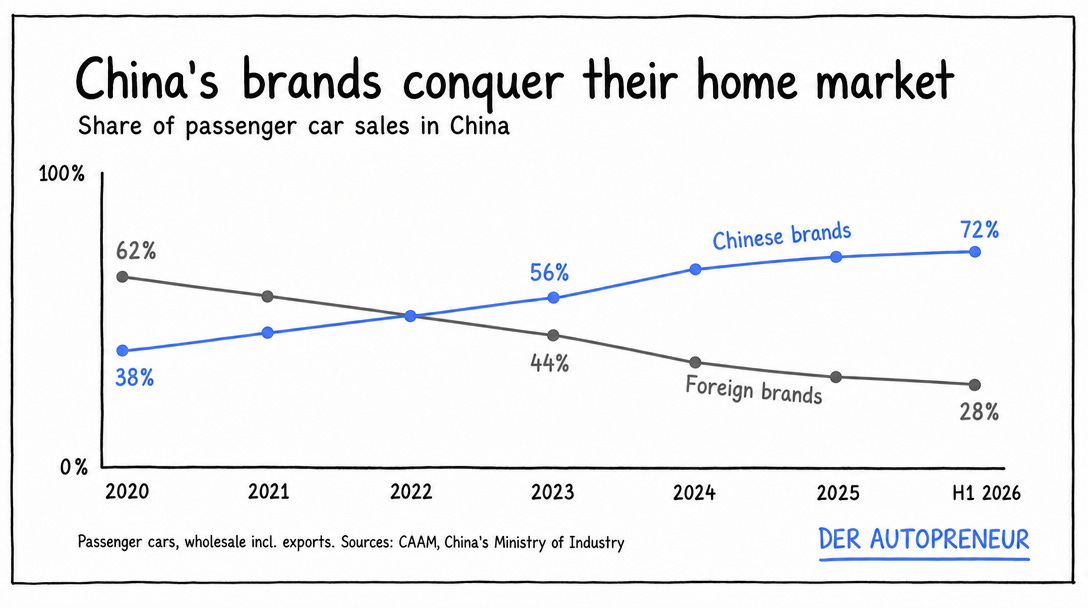
German brands have lost half their market share in China over this period:
In 2020, around 1 of 4 new cars sold in China came from a German brand
Today, it's around 1 of 8
And Wan's plan has worked:
In 2020, 1 of 20 new cars sold in China was electric
In 2025, it was almost 1 of 2
China has also far exceeded the targets set in 2015:
The target was 3 million EVs a year from Chinese brands. BYD alone sold around 3.5 million in China in 2025
Chinese brands were meant to sell 8 of 10 EVs in China. By the end of 2025, it was almost 9 of 10
What China Plans Next
Wan is 74 today. In 2023, he received the Nicolaus August Otto Award in the German city of Aachen. It's named after the gasoline engine's inventor, but Wan received it for his work on EVs and hydrogen. In his speech, he thanked the small German university where he did his PhD: That's where he learned how to create something new.
He also said: Former VW CEO Carl Hahn was right in 1984. Most engineers in China are now Chinese. But China hasn't reached its goal yet.
China's government agrees. In September 2026, it presents a new plan for the car industry. The goal: Make China an automotive superpower by 2030.
China has conquered its home market. But an automotive superpower sells cars around the world.
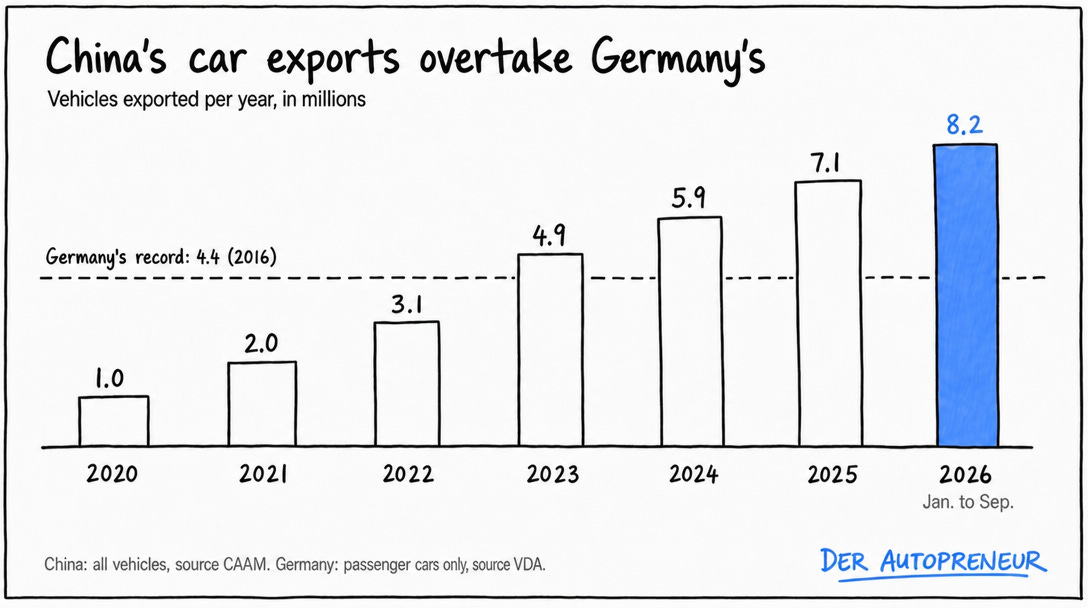
And that's exactly what's happening right now. China's carmakers are expanding abroad:
In 2023, China exported more cars than any other country for the 1st time
From January through September 2026, China has already exported more than 8 million cars
And in Europe, more than 1 of 10 new cars has come from a Chinese brand since this summer
But China is also thinking ahead about the car itself. Former Chinese industry minister Miao Wei talks about 2 halves of the game:
The 1st half is the powertrain: EVs. China leads here
The 2nd half is the intelligent car, with software, AI and autonomous driving
And he says: The game won't be decided until the 2nd half.
China is shifting its funding to exactly that. There's already less money for powertrains.
The funding now goes to what makes cars intelligent:
By 2030, cars should drive themselves on highways
A separate program aims to bring AI into cars
And China wants to catch up on automotive chips and operating systems
My Take
In Germany, I often hear: China copied us. Wan Gang's story shows something else. China got to know us very, very well.
Wan spent 15 years learning from us. Then he turned what he learned into something new in China.
And China even does this systematically. Back in 2006, the government wrote the steps into a plan:
Adopt technology from abroad
Understand how it works
Use it to create something new
So copying is only China's 1st step.
China saw where our strengths were. But also our weaknesses. And China found a way around our strengths. That's the real lesson for me.
VW and Audi together still lead China's combustion-car market. It's just that people in China buy fewer and fewer combustion cars.
And then there's the other thing I often hear in Germany: We missed the shift. I don't think that's right either. German carmakers focused on their strengths. And that was completely rational too.
They had a successful business model and kept perfecting it. It kept getting better, more efficient and more profitable. So there was no pressure at all to change. Nobody had to think about life after combustion engines.
VW CEO Oliver Blume now says so too: In Germany, VW lived off its past success for too long.
Today, Wan says: Europe was China's role model. China will keep learning a lot from Europe.
And I think that's what we can take from this story. Germany should be just as open and curious as Wan was. And learn from China the way China learned from us.
That means going to China to see how people work there. Where the companies are strong. And where they're weak.
And these days, you can do that without leaving Germany. Chinese companies are coming to Europe. And they're hiring skilled people. But in Germany, people who join them often get called traitors. Yet that's exactly what Germany should encourage. Because at some point, these people bring their knowledge back. Just like Wan Gang did.
Then we can do exactly what China did: Find a way around China's strengths instead of fighting them head-on.
The 2nd half of the game is about to start. So above all, we in Germany should ask ourselves: Who here actually knows China as well as Wan knows us?
🔗 zdf | zt | tj | gov | xh | am
PS: Reading this in Promotions or spam? Add autopreneur@substack.com to your contacts, or just hit reply. That tells your email provider to deliver it to your inbox.
PPS: Know someone in the car industry who wants to understand how China really caught up? Send them this issue.
A word from me
You could help Mercedes or Bosch. But they've never heard of you
The German car industry is a closed club. You're either inside or outside. And from abroad, you start outside.
Outside means paying over $20,000 for a trade fair booth. And you leave with 100 business cards and 3 real conversations.
I'm on the inside. I spent almost 10 years at Mercedes-Benz. Every week I reach over 100,000 people in the German car industry through my German newsletter, podcast, YouTube channel and LinkedIn. They trust me. So when I tell them about you, they listen.
An IT services company got 250 webinar signups this way. A consulting firm got 60 new contacts at decision-maker level.
My partnership page shows packages, prices and past campaigns with their results. You can also request a free 30-minute call there. By the end of it, we'll know if it's a fit.
The last open campaign date this year is December 20.
See you next Wednesday,
Philipp